A mother is supposed to hide her feelings from her child, but I can’t. Fourteen years old and Judith hates me. When I was still married to her father, I would dream he had ended things without leaving. He stayed in the house, sneering at me, grimly mixing cocktails and taking a succession of indelicate women to our bed. That’s what living with Judith is like. She’s immune to all my sobbing in the shower. My emotions must seem to her immaterial and insane, like a carnival act.
Our trip to visit Mom did not go smoothly. I was a fool to travel to Bishop during Mule Days, our High Desert town a temporary hotbed of old-fashioned sin. I wanted Judith to see it. I wanted Judith to see anything that wasn’t the Sacramento suburbs, or lifeless on a screen. Unthinkingly you raise a child where you’re not from, and one year it hits you: You and her aren’t from the same place. She’s never been catcalled by boys in spurs, or scolded by a fat lady in painted-on jeans and a fringed shirt. Crucially, she doesn’t know the unholy sound emitted by an equine hybrid who’s been driven from Kentucky to eastern California and made to stand in a tent among 700 overstimulated Johns and Mollies. Does the braying haunt you too?
This story appears in Issue 36 of Alta Journal.
SUBSCRIBE
As we pulled into town, Judith caught sight of all the missing girls on the chain-link fence outside the fairgrounds. Carly and Aimee and Lacey, last seen in a silver Chevrolet; last seen last spring; last seen with a five-foot-six Hispanic male. Remember Rayna? Her picture still hangs, blue eyes lined with so much shoplifted eyeliner. “What is this?” Judith asked me. “The child abduction capital of America? Population: Dwindling?”
Girls get snarky after they lose their virginity, do they not? A few weeks ago she was peeing nonstop and I thought to accuse her of having a sexually transmitted disease, but managed to play that scenario out in my mind and resist it. I don’t even know what disease has peeing as a symptom, if any. What I really wanted to show Judith was not the regular rodeo shit, no offense, but my childhood favorite, the packing scramble. I wanted her to see the equines stripped bare in the dirt of the arena, the shadow of the Sierra, horses and mules all mingled.
To distract Judith from the missing girls, I started to explain it. “What happens is a gun shoots a blank and the animals, many of whom are strangers to each other, they form a herd. Then these packing teams rush toward the stampede, which is hard to do. You have to ignore your gut telling you not to do it. Then everyone wrangles and repacks their animals. Loads have to be high and tight on the mules’ backs, nothing loose or flapping around their bellies. To win, you do a lap around the ring with your mules tied together.”
“That’s really random,” was all Judith said.
As a kid I liked watching the chaos build, then surrender, the arena speakers crackling with Johnny Cash, the announcer rambling about heritage, legacy, the Wild West. All the dust those mules kicked up. The sacred smell of manure and freshly oiled leather. There was pleasure in taking a break from pretending I didn’t care about any of that.
Funny thing was, later that same day, Judith and I walked around the fairgrounds to calm down before dinner. I drank too much lemonade and had to find a Honey Bucket. The line was long, and by the time I caught up to my daughter, she’d found herself a packer. He was one of those thin-faced young men whose eyes squinted against the sun whether it was out or not. All his life folks would recognize him by his hat, belt buckle, and skinny confidence. At present he looked about 25.
I don’t know if he explained his situation to Judith, or if she connected him to the event I’d so breathlessly described in the car, but she must have liked the way he stood, as if newly fastened to his legs. I watched her provide him with her phone number but made the impulsive decision to pretend I hadn’t. Pick your battles and all that. In hindsight, this would’ve been a fine battle to pick. My reflexes remain bad.

Mom came to the door with her face caked in beige, eyes smoldering, a slash of red lipstick. No longer beautiful, she still puts in the time. She did her cooing and fawning: Oh, what a treat, how special, that we would drive all this way and put up with traffic just to see little old her. She was over the moon. Meanwhile, Judith went catatonic in Mom’s presence. She wanted nothing from her grandmother and couldn’t begin to reckon with what Grandma might want from her. Remember how hard it is to be that age, ruled by nothing but your own desire?
I touched my daughter’s back, nodding at our duffel bags slumped on the porch. “Should I put her in Natalie’s old room?”
Mom looked at me like she always has, astonished for no reason. “Where else would you put her?”
The house was the same. Quilts draped over chairs, chickens on the wall, TV volume up. It takes a lot for Judith to react to her surroundings. She has, I’m sorry to report, her generation’s bone-chillingly vacant gaze. I want to blame cell phones, but then I wonder how alert I looked as a teen in this town.
When Judith saw where she would sleep, she was briefly animated. “What is all this stuff?”
“My little sister was a trick rider.”
Impassively, Judith took in the piles of ribbons, the newspaper clippings, the closet stuffed with outrageous costumes, satin and chiffon.
“It’s like gymnastics on horseback. You stand up and ride two stallions at once, or you hang upside down and threaten to break your neck. That kind of thing.”
“Is that a cape?”
“Sometimes she waved an American flag, like she had won a war.”
“Was she any good?”
“A showstopper in her day. I need to call the magazine to check in, and then I want us to take Grandma to Vons. Her fridge is empty.”
A week earlier I’d been laid off from Western Lifestyles. Shouldn’t have been a surprise, but it was. There was no one to call, and while I’m being honest I might as well admit I had no idea if Mom needed groceries. I hadn’t been home in years, not since Judith was 10 or 11, the divorce fresh.
I’d warned Judith that Mom was a difficult woman and our job was to treat her with unfailing kindness. Privately, I rooted for Mom to let it rip, unleash all her resentments, grievances, make her beleaguered demands for attention. I thought it’d be valuable for Judith to see these things in action. Not because I expected my daughter to respond to me with anything like the beatific tolerance I intended to demonstrate, but because Mom at her sweetest is worse than me at my most demented. I really believe that.
We went to Vons, and Mom, stooped over by her bad hip and stuffed into embroidered jeans, yanked the shopping cart from my grasp, took my daughter by the waist, and told her, “You get anything you want, now.”
So went my plan of filling Mom’s cart with fresh produce and protein-packed yogurt. Judith said, “I don’t want anything,” and I clenched my teeth at her. Now was no time to pretend to have an eating disorder. Mom will of course pick up on a girl’s aspirational dieting, but not in the way Judith wanted. Grandma nodded her approval. “It’s good you’re watching your figure. You’re slender now, but a woman doesn’t stay that way if she’s not careful.”
My poor, insulted teen. I watched the wheels turn. What do they say about your enemy’s enemy? That logic would favor maternal grandmas everywhere, but what an antihero Mom has become. The withered cleavage, the lipstick on her teeth. Every morning she drives her truck down 395 to Keough’s Hot Springs to hold court in the soaking pool. Doesn’t matter how hot it gets outside, she’s sweating into the hundred-degree mineral water telling anyone around about 1982.
“I was 37 years old and pregnant with my second. I had my babies real late in life because I was, well I was”—as if improvising, dredging up her biography from the undusted corners of her mind—“a rodeo queen, I guess you could say. I did the whole circuit. Texas, New Mexico. I didn’t want to let it go, but I finally got married and he sort of wanted some kids. Doctor told me to stay off horses while pregnant. I about died. Came here every day for my sciatica. I was coming down those concrete steps when my water broke. The, um, fluids, the amniotic fluids gushed right into the pool but no one thought to get out. Can you believe it? Lifeguard called me an ambulance and that was that. They cut her out of me two months early. The hospital didn’t have diapers that fit a baby that small. Her diapers had to be ordered special from Chicago.”
For years I’ve heard about these diapers from Chicago. Mom repeats the detail so often it’s become one of those immutable, precious facts to which the elderly cling. At some point, probably when I was postpartum with Judith, the story started making me crazy. Why did it matter the diapers were from Chicago? What did Mom know about Chicago? Nothing. To Mom, I thought, Chicago was unimaginable. She couldn’t even imagine a person who could imagine Chicago.
We passed through the bakery and Judith put a four-pack of cinnamon rolls in the cart. I sometimes wonder if she has oppositional defiant disorder, a new thing they’ll diagnose your kid with if you ask nicely. Her grandmother posits she might get a little chubby one day and suddenly Judith wants a 900-calorie pastry. I didn’t say anything. Vons is crammed with every kind of tourist these days, especially now that planes fly between SFO and Bishop. We’ve got climbers, hikers, backcountry skiers, affluent Germans, confused Russians, rednecks, Vegas influencers, rodeo clowns, old-fashioned outlaws, and wine moms on girls’ weekends. It’s a mess. We’d parked way out by the gas station. Before loading the bags into Mom’s truck, I gave Judith the key and told her to get the AC going. She panicked, not knowing how to start an engine with a regular key.
“No. You do it.”
“Goddamn it, Judith,” I snapped.

Mom went to lift a bag from the cart and froze. “What are these?” I recognized the slow release of maternal rage directed at Judith. I had no idea what Mom’s problem was. The tension between me and my daughter had nothing to do with her. “Did you put these in the cart?” In her hands was the four-pack of cinnamon rolls, the icing translucent in the heat.
Judith despaired. “You told me to get whatever I wanted!”
Mom hit her with that ancient astonishment. “I certainly did not.” My daughter’s jaw fell open. “This package cost eleven ninety-nine. That’s twelve dollars. Twelve dollars for something with no nutritional value, something I can’t even serve my family for dinner. I could make these for about a quarter of the price, if I had the time. But I can’t just drop everything. I’m not exactly a woman of leisure.”
Judith squeezed her shoulders into a helpless shrug, like she used to do halfway through her piano lesson when she hadn’t practiced. She could’ve been a good player if she’d ever bothered to practice. Whatever, anyone can get decent at piano. Putting on a sequined bodysuit to do a handstand on a mustang is in a different league. I grant that. But either way, you grow up, and no one wants to watch you.
I took the pastries from my mother’s trembling hands. “Those are mine, Mom. I paid for them. They’re for me.” In fact, I had paid for everything.
On our way back to the house—which needs a new roof, by the way—we passed a billboard advertising that night’s musical performance. A threesome of long-haired cowboys in bolo ties and lurid little mustaches. There was something aggressively inauthentic about them. They were bisexuals, or from Los Angeles. Having never heard the songs I could hear the songs, camp and convention braided tight, invulnerable to any particular criticism.
“That’ll be a nice show,” Mom said, civilized in the passenger seat.
“You’re a fan?”
“Sure,” she said. “They’ve been around a long time.”
I suggested to Judith she might like to go to the fairgrounds with me, check out the festival while Grandma took a nap. Judith, still rattled, agreed. After I pretended not to see her give her number to a packer, the two of us visited the mules in their stalls. We read their overwrought names aloud to each other. We ate our chili dogs standing up while the sun went down.
At home my daughter has a little boyfriend. An age-appropriate child from an unbroken family. The parents assure me none of his video games are violent. They’ve raised him right. The existence of the little boyfriend brings me no comfort. To a 14-year-old girl, a 14-year-old boy is like a Happy Meal to a grown man when he ordered a Quarter Pounder.
Mom’s house was dark, her nap having merged with the night. I went to sleep on the hide-a-bed in the living room, wrapped in those daffodil sheets. I slept deeply, as if lulled by a half-remembered faith in someone watching over me. Mom uses my old room to store quilts. In the middle of the night, she shook me awake.
“Natalie’s not in her bed.”
“Natalie?”
“She’s gone. She snuck out again.”
“Judith’s gone?”
“That she would do this the night before a performance! I could spit nails.”
Judith had powered off her phone so I couldn’t track her.
In her nightgown, in her misery, Mom went, “I’m going to kill her. Now we have to get dressed up and go down there, pay through the nose for tickets, find her in that piss-drunk crowd.”
I had to think fast. My daughter was missing. Mom being good as gone was somehow a secondary problem. But she is as good as gone.
“Natalie’s fine,” I said. “She went out with Rayna, remember?”
“With Rayna?” Mom always loved Rayna.
“To the concert. She’ll be back by midnight.”
Mom’s eyes were wide. She was desperate to put her trust in me. I tried to be worthy of it and led her back to bed. “Natalie works so hard.” A little lie, or maybe it’s not. “She deserves a night off.”
“She’s a good girl.” Mom lay her cheek on the beige-stained pillow.
Fifteen years ago, when I found out I was pregnant, I wanted a girl. All the women I knew wanted girls. As if our daughters would be our mothers in the end. They won’t, but then again, you should have seen my Judith when she was small. As solemn and cautious as a saint. I wanted her with me every second.

I knew I wouldn’t find Judith at the fairgrounds. Honky-tonk meant nothing to her. To find a girl you have to think about what she really wants. You have to consider things that are none of your goddamn business. Well, whose fault is that? I found my daughter in the back of Rusty’s Saloon, that mule packer’s hand so far up her cutoffs I about called the fire department. It was impossible to say where, exactly, the packer’s skinny fingers ended. Didn’t make much of a difference, but I thought of those forms at the pediatrician’s. From now on I’d have to answer no to allergies, no to family history of disease or deformity, yes to a roof over our heads, no to feeling unsafe in the home, no to all the horrors but one: criminal molestation at Mule Days.
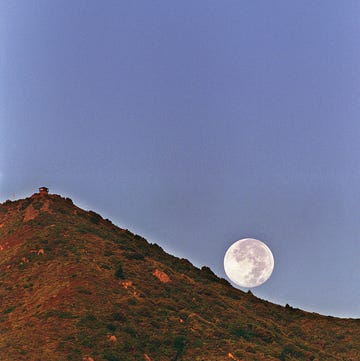
She put up a hell of a fight. She clung to her mule packer and bit my forearm once I’d wrested her loose. Meanwhile, the young man looked around the bar wildly, as if waiting for someone to pin him down. It’s been a week, and I still have an arch of a crescent moon in the middle of a bruise. Driving away from Mom’s house, which we did in the morning, should have been a relief. We were buckled in with the engine running when Mom appeared on the porch, unsteady in her sheepskin slippers, screen door slamming behind her. She gestured for me to roll down the window.
“You know, Judith would respect you more if you took better care of yourself. Put in some effort, lost the baby weight. A girl looks up to her mother, but if all she sees is someone who’s already called it a day…”
“Mom.” I closed my eyes and saw horses galloping. “I don’t always look like this. I’m going through a bad time.”
The more obvious a thing I said, the more Mom fixed me with disbelief. “What are you talking about now?”
Turning north on 395, I was all dread and trepidation, like when you leave the hospital with a newborn. Already I felt nostalgic for days I’d once considered hard. And this time, I couldn’t even pretend to have a husband who would prove useful and kind. It’s always the stuff for which I’ve had my whole life to prepare that shocks me most. My instinct tends toward big, bold gestures. I might sell my house and move back to Bishop. Or I could bring Mom to live with me. Deep down, I know the sheer scope of my selflessness won’t protect me from my failures. What will matter from now on is how I behave in parking lots and waiting rooms. Left to my own devices, my efforts will be insufficient. I’m warning you.
Here we are, Judith and me, back in Sacramento and abusing each other. My expectation is we’ll keep at it forever, though I’d welcome occasional relief. On her wedding day, maybe, if Judith has one of those. Real love means loving a person as they are right now, with no hope they’ll ever change or hate you less. Loving only what loves you back is for cowards. You ever thought of that?
It’s four hours from Chicago. I can meet you at the airport. Mom will be over the moon if you would come home.•
Emily Adrian is the author of several novels, including Seduction Theory. Her fiction has appeared or is forthcoming in Granta, Harper’s, the Point, and other venues. She teaches at the Sewanee School of Letters and is an editor at Great Place Books. Originally from Portland, Oregon, she currently lives in New Haven, Connecticut, with her family.