
The wildflowers are disappearing, and the hills, which seemed paint-smeared for a time, are turning gold again under the rising heat. As we look ahead to autumn, it might feel as if our attention is divided among multiple dark futures, and yet we can’t truly say that this darkness is new. Humans have faced worse, behaved worse. How does art best convey the world—through techniques that mirror our experience of a fractured existence or by offering a single narrative? Authors successfully use both strategies in service of their stories. This month’s selection, Naomi Hirahara’s novel Clark and Division, makes use of a clean, cohesive narrative in which pieces of the past illuminate the mysteries faced by the protagonist Aki Ito.
The books our selection panel has chosen for the approaching season, however, happen to be works that tackle their material using formal techniques of fragmentation, distillation, dispersal, and strengthening. They reveal to us angles on worlds that we may or may not be familiar with. The books are a novel in stories by a San Francisco–raised author; a nonlinear memoir that uses a pastiche of several materials, including the history of the Ohlone Costanoan Esselen Nation; and a San Gabriel Valley author’s visceral debut short story collection, which gathers the voices of Latinx characters.

The Candy House, by Jennifer Egan
Structured like a network or a spiderweb, Egan’s imaginative novel in stories—her seventh novel—refracts themes of memory, technology, and authenticity. While this novel can stand alone, it also serves as a sequel of sorts to the earlier A Visit from the Goon Squad. Egan’s fans will find added enjoyment in tracing the storytelling circuit that links Goon Squad’s peripheral characters to the characters in The Candy House. At the outset, we’re introduced to a tech founder who uses professors’ experiments with downloadable memory to make a popular social technology called Own Your Unconscious, which allows people to link their memories into a collective unconscious. The wide-ranging group of protagonists in The Candy House wrestle with the value of this new technology and its possibilities.
In the New York Times, which named it one of the 10 best books of 2022, James Poniewozik described the novel as “a spectacular palace built out of rabbit holes.” For her Boston Globe review, author Priscilla Gilman called it “a marvel of a novel that testifies to the surpassing power of fiction to ‘roam with absolute freedom through the human collective.’”
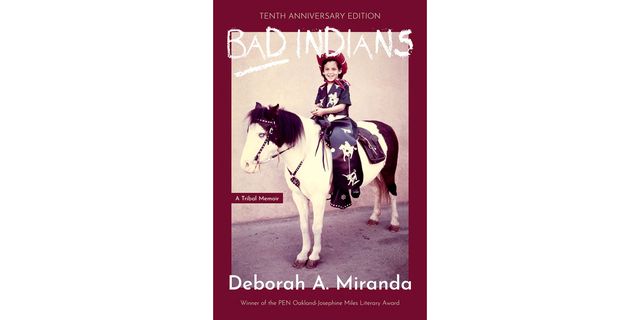
Bad Indians, by Deborah A. Miranda
Miranda forges a vivid and urgent memoir of abuse and love. Her personal history is inseparable, as she presents it in Bad Indians, from fragments of the haunting tribal history of the Ohlone Costanoan Esselen Nation and the story of her parents’ tumultuous mixed union. The resulting book is an unforgettable collage of personal reflection, oral histories, poems, photographs, thought experiments, and stark news clippings, including the headline alluded to in the title, about a purportedly “bad” Indian who responded to cruelty by going on a rampage. Pointing our attention to a line of structural violence, Miranda frames her critique of painful missionary mythology with the now mostly defunct mission project that Californians for decades constructed in fourth grade in public schools.
The hybrid memoir received the 2015 PEN Oakland–Josephine Miles Literary Award and a Gold Medal from the Independent Book Publishers Association and was short-listed for the William Saroyan International Prize for Writing. Bad Indians was published in a 10th-anniversary edition by Heyday in 2022. Poet Joy Harjo recommended it, saying, “Bad Indians stands out as a classic quintessentially Indigenous memoir.”
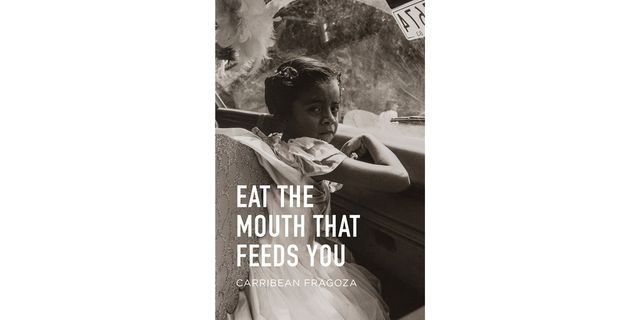
Eat the Mouth that Feeds You, by Carribean Fragoza
Fragoza’s Eat the Mouth That Feeds You is a feminist short story collection that gathers work of sensual corporeality. Ten surreal stories about Chicana women, sometimes grotesque, often sketched with great tenderness, draw you deeper into what it feels like to be alive. These tales deploy sight gags, insights about power, and careful illumination of the body—its hunger, its blood, its guts—to excavate human truths. Relations, both intact and severed, among women are at the forefront: Children observe and then supervise their mother as she chops up not only logs but also furniture, and then eventually a living tree is implicated. The angel of a child killed by her father cements a friendship with a girl struck by lightning. In the title story, a daughter literally consumes her mother.
For Alta Journal, author Wendy C. Ortiz wrote, “How these characters negotiate power becomes a story with dark, iridescent wings, taking up habitat in the reader’s body.” In the New York Times, author Kali Fajardo-Anstine called the book “an accomplished debut with language that has the potential to affect the reader on a visceral level, a rare and significant achievement from a forceful new voice in American literature.” Fragoza recently won a prestigious Whiting Award.•
Join us on August 17 at 5 p.m., when Naomi Hirahara will appear in conversation with CBC host John Freeman and a special guest to discuss Clark and Division. Register for the Zoom conversation here.

VANGUARD OF CRIME FICTION
Journalist, author, and editor Sarah Weinman (Evidence of Things Seen: True Crime in an Era of Reckoning) profiles Naomi Hirahara. —Alta

WHY I WRITE
Hirahara shares her reasons for writing, saying, “To capture a reality, whether in the present or past, is a journalist’s calling or sickness, depending on how you look at it.” —Alta

BETWEEN MEMORY AND FORGETTING
Alta books editor David L. Ulin reviews Roger Reeves’s Dark Days: Fugitive Essays, which asks, “How do we begin to live outside narrative?” —Alta

AUGUST RELEASES
Here are 11 books by authors of the West we’re excited about this month. The list includes Hirahara’s new novel, Evergreen. —Alta

DESTINATION BOOKSHOP
Bart’s Books in Ojai is considered one of the most beautiful outdoor bookstores in the world. —Los Angeles Times

FIRST AMENDMENT VIOLATION
Texas booksellers and organizations are filing suit to get a new state law declared unconstitutional. The law, which is set to go into effect in September, would require stores to rate books’ sexual content before selling them to schools. —New York Times

Alta’s California Book Club email newsletter is published weekly. Sign up for free and you also will receive four custom-designed bookplates.


