Let’s go eat,” Betty Fussell says. “I made a reservation at the Grill.”
She’s wearing a big orange hat with a curving brim and chunky orange earrings to match. Her outfit suggests that we’re off to Easter brunch at the Grill on 52nd Street in New York City. In fact, we’re standing on the pastoral grounds of Montecito’s Casa Dorinda, which Fussell describes as “the only old folks’ home I looked at.” The place is art directed and manicured enough to feel like the set of a Merchant Ivory movie.
Fussell, who will turn 99 in July, uses a walker to amble around Casa Dorinda, but I need to step briskly to keep up with her. She’s considered a lion of American food and culture writing, particularly as the author of the 1999 classic My Kitchen Wars, an unsparing account of the joys, transgressions, and disappointments of married life with her late ex-husband, critic and historian Paul Fussell. (Dwight Garner recently described it in the New York Times as “a prickly pear of a book.”) In a broader sense, she’s known as a social anthropologist who effortlessly merged the personal, the intellectual, and the ecstatic, whether writing about the history of corn or the American obsession with steak. “She was a trailblazer in the American food movement, though she’s not as well known as James Beard, Alice Waters or Larry Forgione,” the journalist and prolific cookbook author Melissa Clark has written. “But she worked right beside them, helping persuade Americans to understand and embrace their own food culture, instead of always looking to Europe.” When Fussell arrives at the Grill, one of the restaurants on the campus, the team greets her as though she’s a visiting dignitary, whisking away her walker as soon as she sits down.

Fussell then makes a pronouncement: “I’m going to have some Champagne.” A flute arrives, but that glassware won’t do. “Oh, honey darling, it has to go in a water glass,” she tells a server. “Because I tip it over.” She has a habit of talking with her hands, which can complicate things because Fussell is, by now, functionally blind. “What I don’t see are details,” she says. “I can see colors, shapes.”
Before her eyesight melted into a blur, Fussell managed to finish a new book, How to Cook a Coyote: The Joy of Old Age, a slim and spicy rumination on sex, death, hunger, dancing, and the cycles of nature. I have driven up to Santa Barbara to chat with her about it—and about her life in general, particularly the story of how the pleasures of food and socializing freed her from dullsville. As Garner puts it, “hers was a generation that came of age under the sign of Julia Child and labored mightily and sometimes painfully underneath it.” Child, who died in 2004, wasn’t just Fussell’s predecessor when it came to exploring food. She, too, lived here at Casa Dorinda, and Fussell seems to have inherited from Child the role of Casa Dorinda’s on-site epicurean queen.
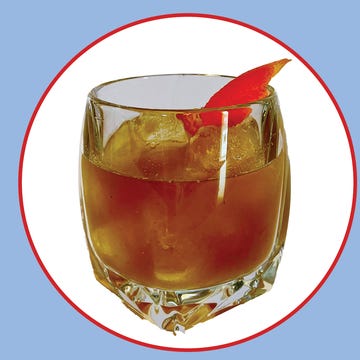
After the liberation of her divorce from Paul in her fifties, she made a ritual of going out for an evening cocktail, then at Café Loup in New York’s Greenwich Village. She’s still doing the same thing at Casa Dorinda—“because I like to be with people, instead of at that cemetery out there.” Each evening, she fixes a grip on her walker and makes her way to the bar here at the Grill. “Because it was my routine in the East, my body is trained for it, and I want to keep it happy,” she says. “Cocktail time! That’s what my body says. I used to have a boulevardier, which I had to teach the bartender to make. Now I’m crazy about the Cadillac margarita.” She raises an index finger and adds, “I never have more than one.”
Born in Riverside and raised in a strict Calvinist family bogged down by poverty, Fussell did not come naturally to the life of a sybarite. “Everything was forbidden,” she says. “Dancing was forbidden—that is, dancing to the music that you heard on the radio, because that could lead to something sexual. The great, great fear was sex. Because that was the animal side. Anything that reflected your animal side was bad. Therefore, all food was bad. Therefore, it didn’t matter what you ate, and you ate as little as possible.” Her family urged her to masticate each bite until food had turned into liquid. “Ooh, childhood was hell,” she says. Watching movies presented her with an alternative to drab evangelical penitence. “I desperately wanted to run away from home and explore real life,” she says. “In the movies, I could go anywhere in the world.”
After lunch at the Grill, Fussell invites me to her sunlit two-room suite at Casa Dorinda. It is outfitted with a booze cart full of bottles beneath a sign that says “Betty’s Dive Bar.” She’s got a James Beard Foundation certificate from her induction into the Cookbook Hall of Fame. The walls are covered with colorful hats on hooks and framed images of family members—and former boyfriends, several of whom appear in sketches in How to Cook a Coyote. She says of one: “I haven’t heard from him for so long that I fear he is dead.” Now and then, she still thinks about Paul, her late ex-husband. “Love is complicated,” she says. “I will always love him, and at the same time, I royally hate him.”
Fussell was ahead of the curve when it came to talking about seasonality in American cooking, but these days, blindness dissuades her from making visits to the Santa Barbara farmers’ markets. “I can’t see the produce well enough, alas,” she says. “That saddens me. I had a strong friendship with the mussel man.” She clearly has no interest in giving up la dolce vita, though. She drinks and eats what she wants. “I had steak last night,” she says. “I want it very bleu, as the French say. I love raw steak.” And even at 98, she’s at work, thanks to a dictation machine, on a new book: “I’m in the middle of writing Murder in Montecito—that’s the title. This is my first work of fiction.”
The secret to living into one’s late 90s? Well, it scarcely crosses her mind. “It doesn’t matter how long you live,” she says. “What matters is that you’re living the way you want to live.” At night, she listens for the coyotes that come down from the mountains and sneak around Montecito. They’re hungry; she’s hungry—the way Betty Fussell looks at it, at 98, that shared hunger represents the life force that keeps us all moving through our days.
“We’re animals,” she says. “All of us.”•
Over the years, Jeff Gordinier has contributed to publications such as Esquire, Food & Wine, and the New York Times. He recently won the James Beard Foundation’s M.F.K. Fisher Award for Distinguished Writing.