Pity the misunderstood California apricot. It has the shortest harvest season of all the stone fruits (10 days to 5 weeks), is barely on supermarket shelves before it’s gone, and is often accused, justly, of being mealy, bland, and boring. Many people, in fact, have never even tasted a good apricot.
That’s because the tastiest of them all, the Royal Blenheim, is nearly commercially extinct. A cult favorite found mostly at a dwindling number of California farmers’ markets, the Blenheim doesn’t ship well, bruises easily, and lacks the size and cosmetic appeal of its big, pretty cousins. California produces 90 to 95 percent of the nation’s apricot crop, yet fresh Blenheims are absent from grocery stores, as if they no longer existed. Soon, I fear, they won’t, as orchards continue to be bulldozed for housing, supermarket chains demand hardier varieties, and global trade makes it impossible for large California growers to compete with cheaper—but blander—Turkish imports.
This article appears in Issue 35 of Alta Journal.
SUBSCRIBE
California harvested 5,300 acres of apricots in 2023, down from more than 15,000 acres 20 years earlier. Robin Chapman, author of California Apricots: The Lost Orchards of Silicon Valley, has documented the disappearance of the fruit. She writes about the miles of orchards that covered the Santa Clara Valley in the 1950s and ’60s, before tech campuses replaced fruit trees. Nostalgia for the trees lingered even among Silicon Valley’s steely-hearted titans. When Steve Jobs bought the lot next door to his Palo Alto home, Chapman notes, it wasn’t to expand his house but to plant apricot trees, a reminder of the orchards that had surrounded him during his childhood.
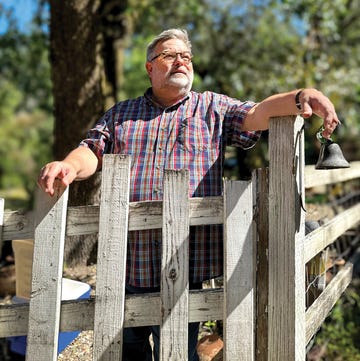
In Central California, one of the few remaining Blenheim orchards belongs to Mike Cirone of Cirone Farms, near San Luis Obispo. He dry-farms 10 acres of Blenheims (an underground aquifer and winter rains provide the only water) and also grows apples, pears, and peaches. In high summer, Cirone rises at 1 a.m. each Wednesday to drive to the Santa Monica Farmers’ Market, where chefs who avidly seek his small, speckled apricots have preordered entire cases (as do I). Every year when I text him, I worry he’s sold the orchards. Cirone is in his mid-60s, works with only his son and one employee, and sometimes talks about retiring. Climate change, drought, and water scarcity have made small-scale farming increasingly risky.
Cirone grew up in San Luis Obispo and fell in love with Blenheims as a teenager. He and his friends would roam the neighborhood picking fruit, drying it for backpacking trips. After studying fruit science at Cal Poly SLO, he heard a rumor about an abandoned 75-year-old apricot orchard in the coastal hills. The owner, an elderly man, had won it in a card game. Cirone showed up and told him he wanted to take over the orchard. The first year yielded no fruit—the trees required heavy pruning—but the second year, Cirone was able to bring samples to farmers’ markets. People would walk away, then make a U-turn, saying, “Oh my God, this is like my grandma’s.” That’s because his orchard, he says, recalls “the fruit trees of yesteryear.”
But as people have come to prefer bigger houses to yards and have lost their grandparents’ traditions of harvesting backyard fruit, the trees have faded faster than High Elves in a Tolkien novel, and the Blenheim has become an exotic heirloom. Jessica Koslow of the trendy L.A. café Sqirl has bought Blenheims from Cirone for 15 years to make jams; Valerie Gordon, the owner of Valerie Confections, does the same, including the Blenheim appellation in her branding.
The history of the Royal Blenheim in the United States is somewhat murky. Most accounts trace it to the 1880s, when cuttings were imported from Europe—perhaps France’s Luxembourg Gardens, or maybe Blenheim Palace in England. Wherever it originated, the variety thrived in California’s sunny climate and became the state’s dominant apricot, remaining so until the late 1980s, common in Sacramento and Santa Clara Counties and ubiquitous in backyards.
We had a Blenheim tree when I was growing up in North Hollywood. Each summer, my Russian-French grandmother and mother made jam, a ritual I now repeat in their honor and for my own larder—a way to preserve a distillation of high summer in dead winter. Most of the year, however, I rely on dried Blenheims, ordered by mail from family businesses such as C.J. Olsen in Sunnyvale and Apricot King in Hollister. My husband may look askance at spending $200 on dried apricots, but it’s my little vice.
Patti Knoblich Gonzalez, who runs Apricot King, represents the fourth generation of her family in the Blenheim business. In the 1970s, she says, there were around 50 orchards in San Benito and Santa Clara Counties. Now, a handful remain. There was a time, Gonzalez says, when her family’s business sold dried apricots by the container to Japan. That ended in the 1990s, when Turkish apricots flooded the market at a dollar a pound. California growers couldn’t compete. “We begged for a tariff,” Gonzalez says, “but our congressman said we were too small of an industry to do anything about. And poof…there went 5-to-100-acre parcels of Blenheims. Trays were burned, equipment scrapped—nobody could make a profit.”
Today, her family farms 57 acres, harvests 200 tons of Blenheims a year, and employs about 100 people each summer. Developers are already “kicking the tires” on Apricot King’s land as Hollister expands. “My husband says, ‘Why are you doing this?’ ” Gonzalez says. “But they’re so good, and people love them. We’ll keep doing it until the money runs out.”
Cirone puts it simply: “Blenheims used to be the backyard tree. They’re adaptable, and they are a California icon that should be reinstituted in everybody’s backyard.”•
Denise Hamilton is a Los Angeles native, crime novelist, and former reporter for the Los Angeles Times. She’s the editor of Los Angeles Noir and Los Angeles Noir 2: The Classics and was a finalist for the Edgar Award. Read more about her at denisehamilton.com.